
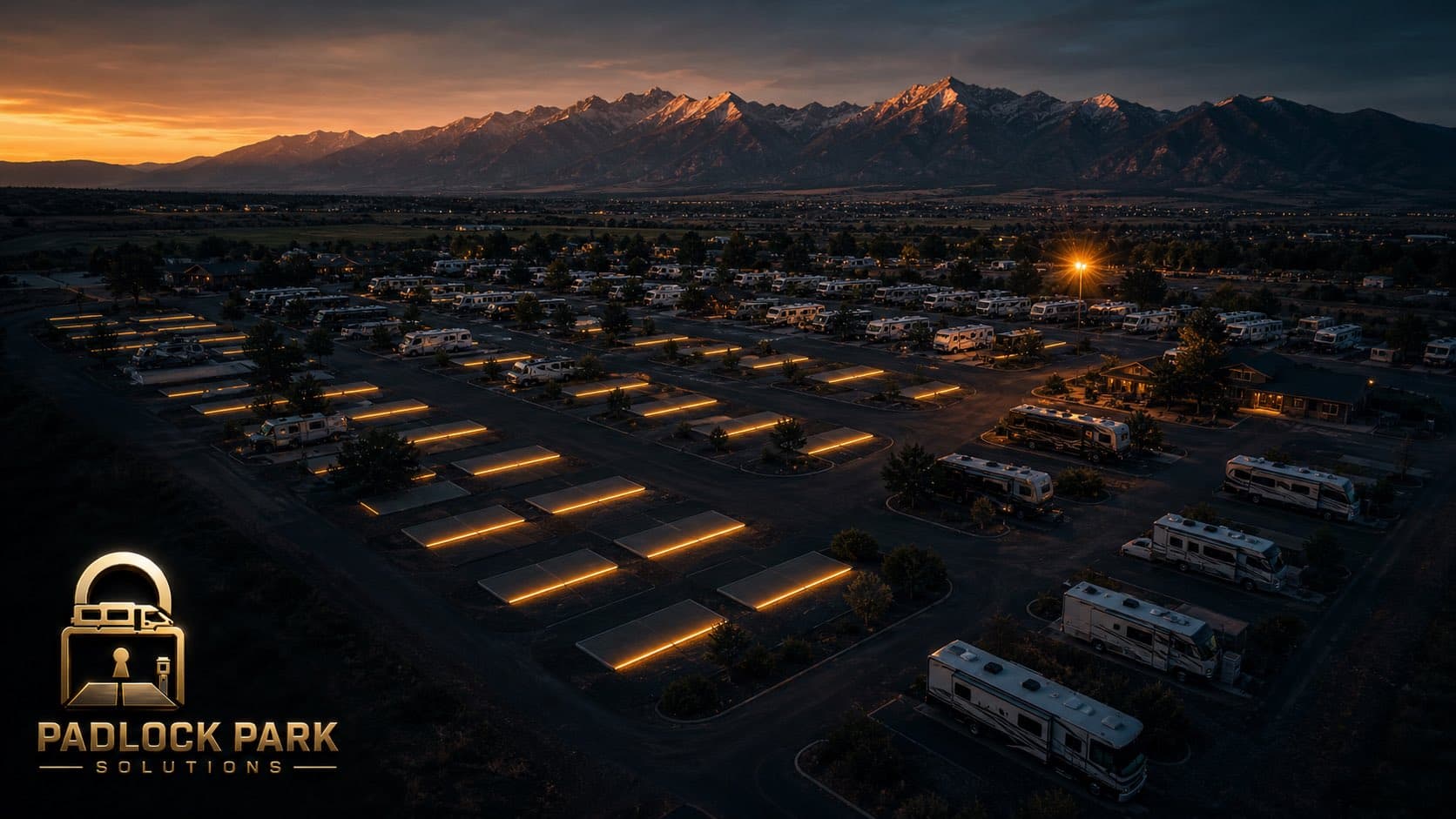
The power
Park-owned energy infrastructure.
Sol Ark hybrid inverters paired with 12 kWh or 15 kWh battery banks. Solar primary. Optional micro-hydro for stream-side parks. Bank the energy. Scale the storage as the park grows.
The system
What we install.
Sol Ark inverter.
Hybrid inverter — works grid-tied, off-grid, or both. Hot-swaps between solar, battery, generator, and grid based on availability and demand.
- ▸8K, 12K, or 15K continuous output options.
- ▸Grid-forming capable for off-grid operation.
- ▸Generator integration for backup redundancy.
- ▸120/240V split-phase output, RV-park standard.
Battery storage.
12 kWh or 15 kWh modular battery banks. Stackable for additional capacity as the park scales conversion units.
- ▸12 kWh or 15 kWh per stack module.
- ▸LFP chemistry — 6,000+ cycle life, thermal stability.
- ▸Modular: add stacks as conversion units come online.
- ▸Indoor or weatherized outdoor enclosures.
Optional hydro.
If there's a stream on or adjacent to the property with adequate flow, we design a waterwheel-driven micro-hydro system that banks alongside the solar.
- ▸Site evaluation: flow rate, head, year-round availability.
- ▸Designed for 24-hour generation (solar runs 6–8 useful hours).
- ▸Banks into the same battery system as solar.
- ▸Permits + water rights handled site-by-site.
Why it matters
Read it the way you think.
For park owners
Your utility bill is a fixed line item that goes one direction. We install solar to flip that.
- Less you pay the utility every month. Roof-mount or pad-mount solar arrays sized to the park. Daytime production goes to the units; surplus charges the battery bank.
- No genny startups when the grid blinks. Sol Ark holds the line through outages — your pads keep power without the diesel howl waking up half the park.
- Stream on your property? Our waterwheel system, sized to your property's flow rate, banks energy alongside the solar. Free fuel that runs at night when the panels are dark.
- Scale as you grow. Modular battery stacks let you add capacity per pad as you deploy more conversions. Don't pay for storage you don't need yet.
- Backup for the front office. Same system covers the office, the pavilion, the laundry — the whole site stays online when the utility doesn't.
For institutional capital
Park-owned generation converts a recurring OpEx line into a depreciating asset and produces NOI lift on the conversion units.
- Utility cost reclassification. Variable OpEx (utility bills) becomes fixed CapEx + depreciation schedule. Operationally, $0.12-$0.18/kWh of utility purchase is replaced with on-site generation.
- NOI lift compounds with conversion economics. Per-pad cooling load (post-Son Shield) multiplied by reduced energy basis flows directly to NOI on every leased or stayed unit.
- Asset depreciation + ITC. Solar systems qualify for federal investment tax credit and accelerated depreciation. Treatment varies by entity structure — confirm with tax counsel.
- Grid resilience as a property feature. In Western US WUI / wildfire-prone zones, PSPS-tolerant infrastructure is increasingly demanded by both tenants and short-stay guests. Premium pricing and lower vacancy in outage-affected periods.
- Modular CapEx pacing. Battery storage scales per-pad, allowing CapEx to track unit deployment. Capital not deployed until the kWh is needed — no idle storage on the balance sheet.
How it compounds
The layers stack.
Convert
Each converted pad becomes a revenue-producing unit. The unit has cooling load, lighting load, hot water draw — all electricity demand the park has to source.
+ Envelope
Son Shield coating drops cooling load 30–60% in peak summer (per the documented field data). The HVAC pulls less, the unit stays at temperature longer between cycles.
+ Power
Lower per-unit electrical demand means a smaller battery bank covers more pads. The same Sol Ark + 15 kWh stack that powered six converted units now covers nine. CapEx per-pad drops.
= Operator outcome
Lower utility bill (or zero, if fully off-grid). Lower cooling complaints. Lower turnover from HVAC failures. Energy infrastructure that holds value through grid rate hikes and outages. The same operator that fights with the utility every quarter now owns generation.